


The Poison in the Well and the Futility of Good in Human Relationships
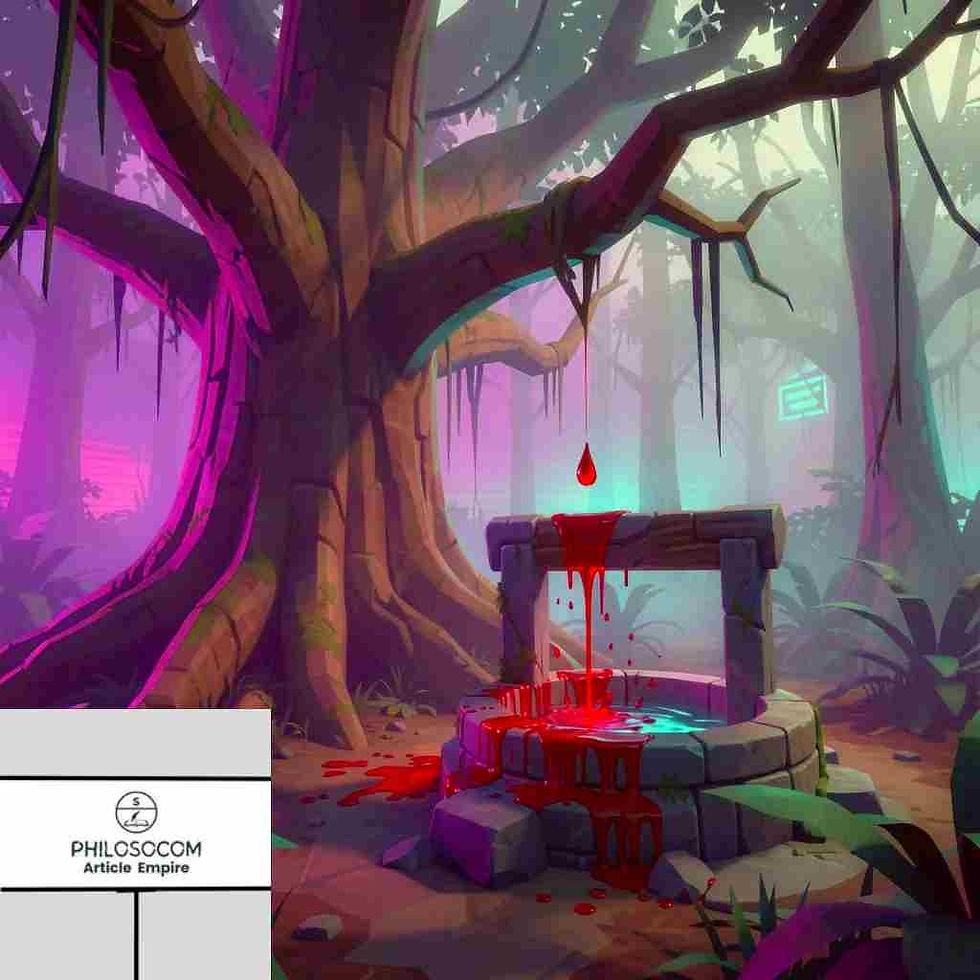
You can do a lot of good in the world, just as I did, but often times, one ink of "poison" can ruin it all. In this cold and harsh world, good deeds often go unrewarded, and due to humanity's negative bias, doing mistakes or things that cause unease in other people, can easily overshadow all the good that you did to them. That is what I learned from my former interactions with people, back when I was personally active on social media.
When you want to be a good person, it is best to be left alone and not bother people. It's not only because they can see that goodness as a weakness to exploit; it's also because your good nature won't necessarily help you when you commit mistakes with other people, or when your good intentions are misconceived. You can be one of the most moral people in the world, and yet one single mistake or misunderstanding can "poison" the entire "well" of your relationship with someone.
Many people have become oversensitive, overstressed and mentally unbalanced. You can say to them something out of innocence and they can lash out at you. It can make you ponder the point of being around most people at all.
While it gets lonely sometimes, being alone can be a good solution to the fact that human company brings misery. As Jean-Paul Sartre said:
Hell is other people.
When human relationships require effort, and the world doesn't owe you the fairness of keeping that relationship afloat despite the hard work you invested in it, it's just best to be alone. We are slowly but surely entering an age of isolation, where the very machines and virtual world that was supposed to connect us, is being corrupted by megacorporations for profitable addictions over genuine human connection. More and more people are becoming solitary, and wary of other people, living in their own internal bubbles, not being able to form friendships or get a partner.
Maybe that is the natural evolution of a world gone horribly wrong; to remain largely alone and with a few connections and that's it. When the virtual world and AI can give you frictionless pleasure and addiction, the effort required to maintain human relationships can be easily questioned for its point.
When humans are easily prone to make mistakes, and these mistakes can easily and ruthlessly destroy relationships that much effort was spent in order to cultivate them, perhaps it is the natural conclusion to learn how to embrace the isolation the contemporary era brings.
Less people, less arguments. Less people, less stress; less people, more freedom to be yourself. To er is to be human, but to forgive for said mistakes can be very hard for people, so many relationships are easily prone to being destroyed over the tiniest, simplest of either mistakes or misunderstandings. The fact that you are a good person that did a lot of good to the world doesn't matter, because there is no justice in the world, and sometimes, unfortunately, good deeds can often go punished.
Let's say that you want to help someone, but that help can easily be interpreted as an attempt to manipulate, no amount of good can rectify the "poison" that was created by the misunderstanding.
A tiny light can enlighten a lot of darkness, but a tiny drop of poison can corrupt an entire well. Human company often brings friction, and that friction leads to misery. Those who are unwilling to go through the friction and the grit of discomfort to maintain relationships, can easily walk away from them despite the good intentions and despite the effort invested in said relationships.
Another metaphor is being an elephant in a China shop. One wrong movement can destroy the entire merchandise. It makes me, at least, wonder, what's the point of investing in most relationships, when one wrong move can easily shatter the entire connection. Perhaps it's best to just focus on very few relationships, and spend most of one's time alone.
For if you're truly good, you wouldn't want to cause harm, even if it is unintentional or merely perceived. As Seneca said:
We suffer more in imagination rather in reality.
Every misconceived good intent or saying could lead to suffering, even if unintended. If one is truly good and is committed to being good, perhaps it is best to isolate and to spare the world of suffering easily brought through misunderstood or misconceived intent or word. People can easily be offended by the tiniest of remarks, even after years of goodwill. And, that remark can easily cause imaginary suffering that is unseen by yourself.
If people worked on themselves to be strong, to be stable and to be resilient, the drop of poison could be overlooked, and the well saved. However, their own work on themselves is beyond one's control, and only they can do it as it is their own responsibility on their own mental wellbeing.
Being alone can easily be seen as an Occam Razor-esque solution. You avoid people, and you prevent otherwise-long investment and efforts on otherwise-established relationships from collapsing over the little lest of things/"poisons". Much suffering in this world, whether imaginary or real, can be prevented if more and more people were fine with sitting in a room alone, as Blaise Pascal would put it.


.jpg)
Comments